

Tell us who you are.
Enter the access code from your manager, then a few details so we can put your name on the certificate and email it to you.
Already started on another device? Enter the same email address to pick up where you left off.
Your masterclass.
Three short modules built for staff who actually serve and cook the fish. Use it on your next table. Earn your certificate at the end.
Two waters. Two fish. One brand.
Your job in one line: to give your diner the best experience by telling the provenance, quality and story of the delicious meal they’re about to eat.
This module covers where the fish comes from, why each location matters on the plate, and the BAP certification that backs it all up.
Know the provenance.
We grow Australia’s premium barramundi for chefs who care where their fish comes from — and that FOH are proud to serve.
Two farms. Two waters. Each gives the fish its own size, flavour, and texture. Knowing which is which is the first thing every team member learns.
No antibiotics. No hormones. No colourants. Ever.
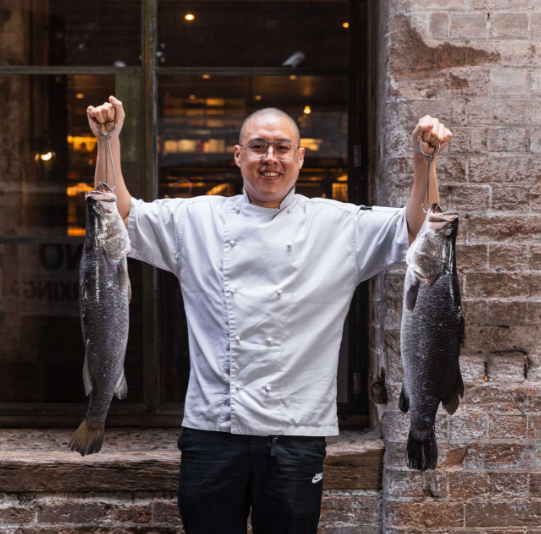

Daintree fillet sized.
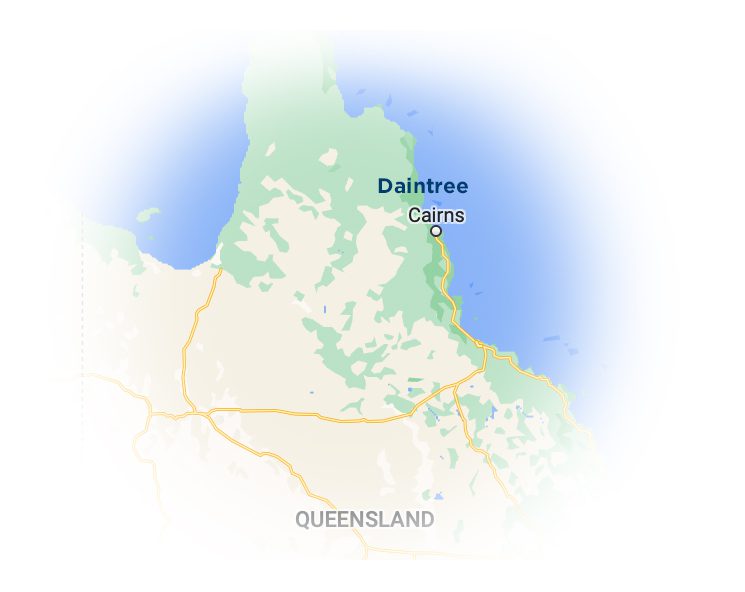
Where: Our Tropical North Queensland farm is located where two World Heritage Sites meet — the Daintree Wet Tropics Rainforest and the Great Barrier Reef.
The water: Pure high-salinity saltwater. The fish grow slowly in it.
On the plate: Daintree produces premium fillet sized saltwater barramundi with a sweet, buttery, moist texture, and large meaty flakes.

Wyndham plate sized.
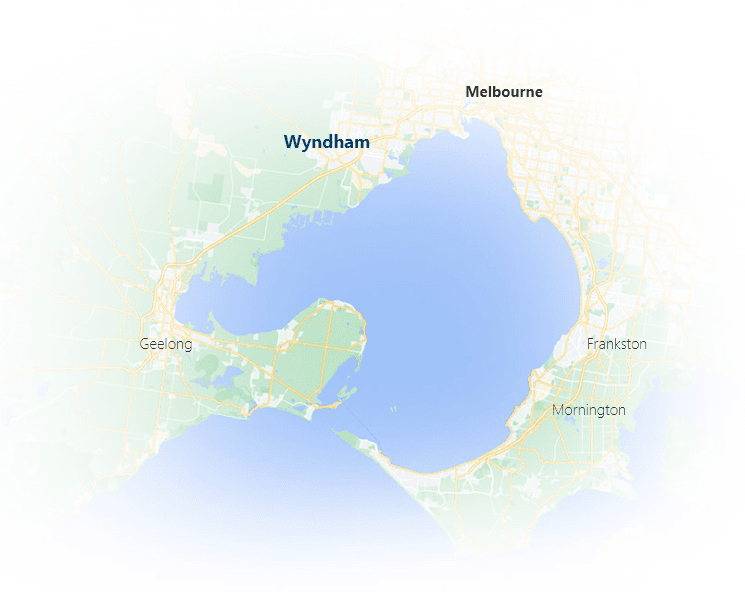
Where: Wyndham, Victoria.
The water: Wyndham barramundi are grown in geothermally heated spring waters, drawn from the ancient aquifer that links Hepburn Springs and the Peninsula Hot Springs.
On the plate: The soft, delicate texture and mild, sweet eating qualities are simply exceptional.
Audited. Not just claimed.

Best Aquaculture Practices (BAP) is an independent, third-party certification for farmed seafood, run by the Global Seafood Alliance and recognised around the world. Every certified site is checked by independent auditors against the BAP standard. Nothing is self-assessed.
What BAP checks
What the stars mean
BAP awards one star for each stage of the supply chain that’s certified. Infinity Blue holds 3-Star BAP:
-
HatcheryWhere the fish are bred and raised as fingerlings.
-
FarmWhere the fish are grown out to fillet or plate size.
-
Processing plantWhere the fish are harvested, prepared and packed.
So the fish is independently checked across three stages of its life, from the hatchery to the processing plant.
“It’s BAP 3-Star certified — independently audited at the hatchery, the farm and the processing plant.”
Fish sourced from our farms can be trusted to be sustainably produced to the highest of industry standards.
The A.I.M. model.
From July 2026, every Australian venue serving seafood must legally show where it comes from on the menu. Three categories, three letters:
The barramundi is strictly 100% Australian. Every dish using the fish earns the A. Lead with this — it’s the single fastest way to build diner trust at the table.
One question.
A diner asks whether the Daintree Barramundi is a dry or moist fish. What’s the strongest answer?
Nicely done.
One down. Two to go.
You can now tell the two-farm story, the BAP 3-Star certification behind it, and what A.I.M. means.
You know the farm. Now know the pass.
This module covers how chefs cook the two fish, how to spot freshness when stock arrives, and the questions FOH must ask before service starts.
Spotting freshness.
The fish is harvested, rapidly chilled, and sent straight to market — which gives you an outstanding shelf life if you handle it right. Train your eye:
How to fillet.
Proper filleting ensures maximum yield and respects the premium quality of the fish. Rather than reading about it, watch the quick masterclass — it’s faster than three paragraphs.
If you’re FOH and not filleting yourself — still worth watching once. You’ll understand why the chef takes the time they do.
Cooking Daintree fillet sized.
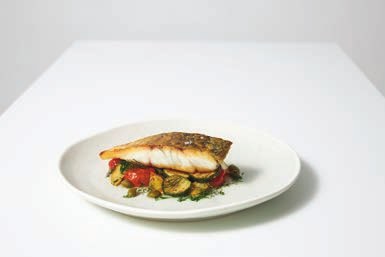
Pan-seared Daintree fillet — crispy skin, large meaty flakes.
The Daintree is a premium 100% saltwater Queensland fillet. The flesh has large meaty flakes and a high natural oil content — which means it’s forgiving on the pass and rewards heat.
- Pan-seared: Hot pan, neutral oil, skin-down for 3–4 min until the skin is crispy and delicious. Flip for 1–2 min and rest.
- Baked / roasted: 200 °C for 12–15 minutes. Finish with lemon, olive oil, and herbs.
- Grill or BBQ: The firm flakes hold together beautifully over open flame.
Cooking Wyndham plate sized.
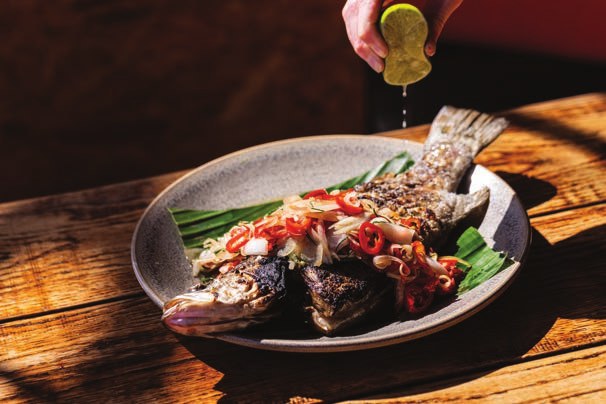
Whole grilled Wyndham plate sized, Asian-style with chilli, shallot and lime.
Wyndham barramundi is the freshest to market, which gives the chef ultimate flexibility on the menu. It’s especially popular in Asian cuisines — the delicate texture holds up beautifully to steaming, wok-frying, and whole-fish presentations.
- Filleted: Crispy delicious skin with a thin natural oil content. Whether served plate-sized or filleted, it fills the plate beautifully.
- Whole baked or fried: Score the skin, season, and bake at 200 °C for 15–18 min. The thin natural fat layer between skin and flesh keeps it moist throughout.
- Whole grilled or steamed: Delicate flake handles open flame if turned carefully. Perfect for single-serve plating, and a natural fit for Asian-style whole-fish dishes.
What’s your signature dish?
Every kitchen puts its own spin on it. Here’s how each fish shines on the plate — use these to picture the dish when you describe it at the table.
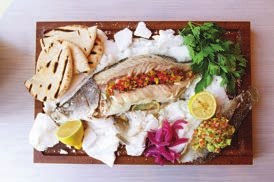
- Pan-seared, skin crisp, over roasted seasonal vegetables
- Oven-roasted with lemon, olive oil and fresh herbs
- Chargrilled on the BBQ, finished with a herb salsa
- Whole grilled, Asian-style, with chilli, shallot and lime
- Whole steamed with ginger and spring onion
- Whole baked on a sharing board with salsa, pickled onion and flatbread
Know your venue’s version. Ask the chef what the signature barramundi dish is here — then own it at the table.
What to ask the chef.
A great story dies if the facts are wrong. Before every service, FOH needs the specifics from BOH so you can describe the fish accurately, pair it well, and answer diner questions with confidence.
Ask the chef:
- Which fish tonight? Daintree fillet sized, or whole Wyndham plate sized?
- How is it cooked? Pan-seared, roasted, whole-baked, grilled, steamed — so you know whether to lead with the crispy skin, the flake, or the delicacy.
- Skin on or off? If on, the crispy skin is the hook. If off, lead with the flavour and texture.
- What’s the chef’s take? How would they describe it? Pick up their language — it usually lands best at the table.
Ask the manager or sommelier:
- Wine pairing? A crisp white, a lighter red? What’s the venue’s recommendation with the barra tonight?
- Beer pairing? Which of tonight’s beers cuts the richness or complements the flavour?
- Sides? What does the dish come with, and what can be added or swapped?
“Chef — what’s on the barra tonight, and how would you describe it to the table?”
One question.
A diner asks whether the Daintree Barramundi tastes muddy. What’s the strongest answer?
Two down.
One more to go.
You know what to ask the chef, what to look for, and how each fish cooks. Ready for service.
The story improves the dining experience.
This module covers the exact scripts for talking to diners, the answers to the questions you’ll be asked this week, and the moment that turns interest into the order.
Pitching Daintree.
Always lead with the place and the taste.
“This is Daintree Barramundi, grown in Queensland where the rainforest meets the reef. It’s a premium, 100% saltwater fillet — beautifully sweet and buttery, with lovely big flakes and a crispy delicious skin.”
For retail or fishmonger customers: follow up by mentioning it’s incredibly forgiving to cook — just 12–15 minutes in the oven. That removes the “I’ll mess it up” objection.
Pitching Wyndham.
Wyndham plate sized is versatile — it works whole, filleted, and is especially popular in Asian cuisines. Lean into whichever preparation the chef has chosen tonight.
“This is Wyndham barramundi, grown in natural geothermal spring water in Victoria. It’s a Wyndham plate sized fish — delicate, mild, and sweet. It almost melts in the mouth.”
For a whole-fish preparation: “The chef scores the skin and bakes it whole — the natural fat under the skin keeps it moist all the way through. Perfect single serve.”
For fillet dishes: “Wyndham fillets are gorgeous — soft, delicate, and full of flavour. Beautiful in Asian-style preparations, or simply pan-seared with a crisp skin.”
The questions you’ll be asked.
Memorise the cadence, not the words.
- Is it healthy? “High in protein, great source of omega-3, no antibiotics, no hormones, no whitening agents.”
- Wild or farmed? “Farmed in clean Australian water — fresh, reliable, and fully sustainable year-round. BAP 3-Star certified.”
- Do kids like it? “Kids love it. It’s not fishy, and it’s yum.”
- Where’s it from? “100% Australian — Daintree from Tropical North Queensland, Wyndham from Victoria. Two farms, two very different waters.”
- What does ‘barramundi’ mean? “It’s from the Gangulu language in Central Queensland — it means ‘large-scaled river fish’.”
Last one.
A diner asks: “Is the barramundi healthy? Are there any additives?” What’s the strongest answer?
That’s all three.
Time to claim it.
The certificate is yours. We’ll email a copy to you as a PDF, and you can print or download it from the next screen.
You did the work.
Wear the badge.

Thank you.
A PDF copy is on its way to your inbox — forward it to your manager.
infinitybluebarramundi.com.au
@infinitybluebarramundi